

TracePro: Optical Simulation
for Innovation in Lighting
TracePro combines Monte Carlo ray tracing, analysis, CAD import and export, and optimization methods with a complete and robust macro language to solve a wide variety of new problems in lighting design.
It is mainly used in lighting design to simulate and optimize light pipes, light guides, lenses, and non-imaging mirrors. TracePro is also a powerful tool for analyzing aspects of imaging systems, such as stray light analysis and polarization effects. With its comprehensive feature set, designers can simulate surface effects including absorption, specular reflection and transmission, and scattering. Properties such as absorption, scattering, and fluorescence enable the design and analysis of devices for a wide range of applications. It is also used to build and test prototypes, avoiding the cost and time of constructing and testing physical prototypes. Users find that they can successfully skip intermediate steps and build only a final prototype.
TracePro provides an integrated software environment that helps you accomplish almost any task in contemporary lighting design—better than a simple ray-tracing program. It also offers advanced tools for designing medical devices, lighting, display backlighting, light pipes, automotive lighting, and many other applications.
Why is TracePro a technology leader?
TracePro is the first Monte Carlo ray-tracing software with an intuitive, user-friendly interface that closely resembles a CAD program. Users find that their work shifts from tedious to productive and satisfying. Occasional users can return to their projects months later and pick up right where they left off. Built on a solid modeling engine, it offers precise CAD import/export capabilities… TracePro and lens import save hours of work by building accurate models for simulating real-world parts. The interactive 3D optimizer helps solve lighting problems in a fraction of the time compared to trial-and-error methods.
It is available in three levels: LC, Standard, and Expert. The feature set in each edition is a subset of the capabilities found in the next higher edition. Each edition is a complete program that can help you design superior systems.
Applications
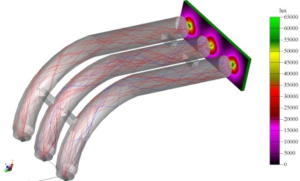
Light pipes or light guides are commonly used in consumer electronics, avionics, instrument panels, switches, indicators, and display devices.
Light pipes are transparent plastic devices molded as a single piece and are used to guide light where it is needed. Smooth curves are used to direct light through total internal reflection (TIR), combined with beveled corners that act as mirrors. Hollow light pipes are also used in natural lighting applications for buildings, tunnels, and other structures. 
Examples of applications for light pipe design include:
- Automotive instruments and dashboards
- Aviation light panels, avionics, switches, and indicators
- Displays, light panels, smartphones, tablets, high-definition televisions, and digital signage
- Consumer electronics displays, controls, and switches
The 3D virtual prototyping environment allows designers to accurately analyze and visualize light pipes before manufacturing. This capability greatly reduces development time and enables designers to create better products in less time. Photorealistic Rendering and Luminance Mapping accurately predict how the light pipe will appear to the eye.
Lighting
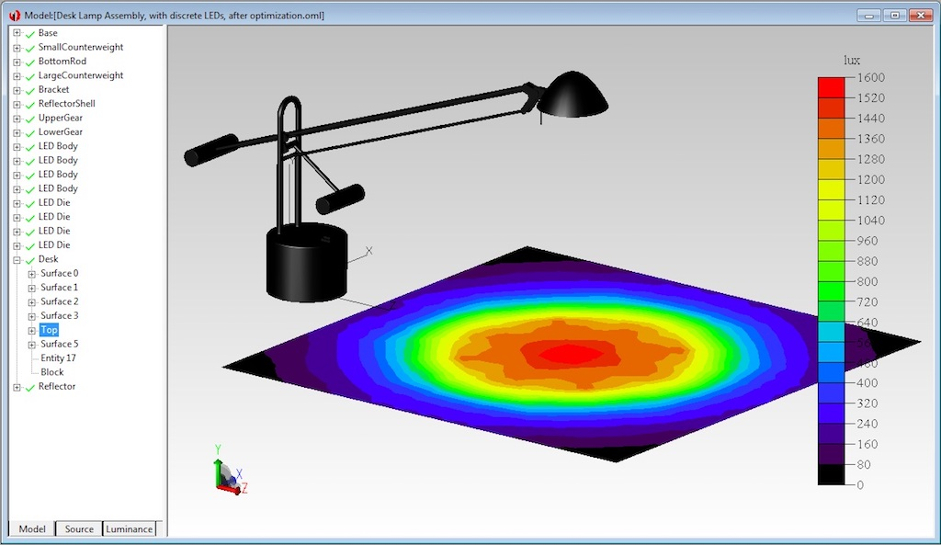
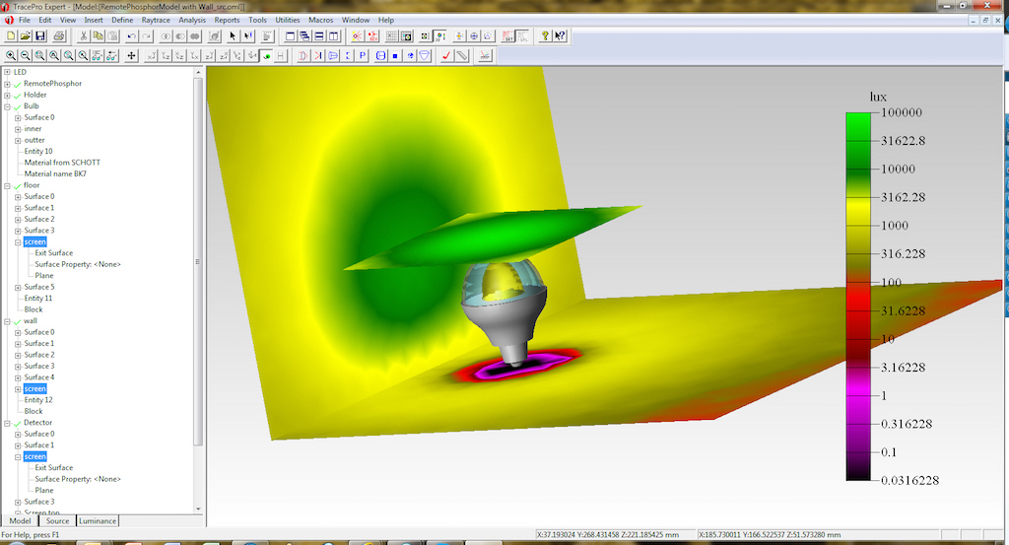
 TracePro offers lighting designers the most accurate and comprehensive design environment available. Lighting system design requires strict compliance with performance criteria, including spatial and angular light distribution, uniformity, intensity, and spectral characteristics, along with aesthetic factors such as appearance when lit and unlit. The result is a cost-effective design that is ready for manufacturing.
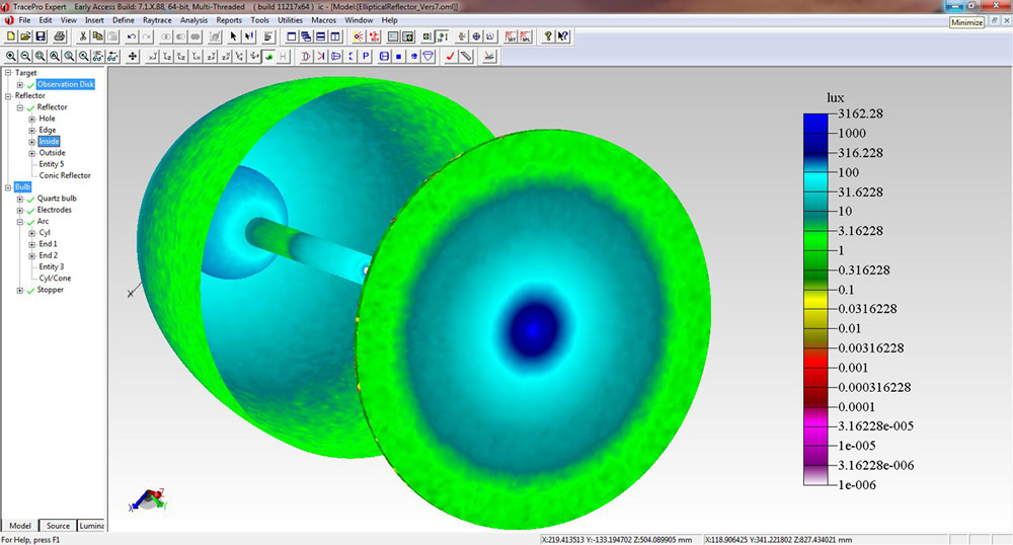
TracePro is a complete and versatile software tool for modeling light propagation. Models are created by importing from a CAD program or by directly creating solid geometry. Rays propagate through the model with portions of each ray’s flux assigned to absorption, specular reflection and transmission, fluorescence, and scattering.
TracePro is a complete and versatile software tool for modeling light propagation. Models are created by importing from a CAD program or by directly creating solid geometry. Rays propagate through the model with portions of each ray’s flux assigned to absorption, specular reflection and transmission, fluorescence, and scattering.
Analyze:
- Light distributions in lighting and imaging systems
- Lumens exiting, absorbed, and incident at the component and system levels
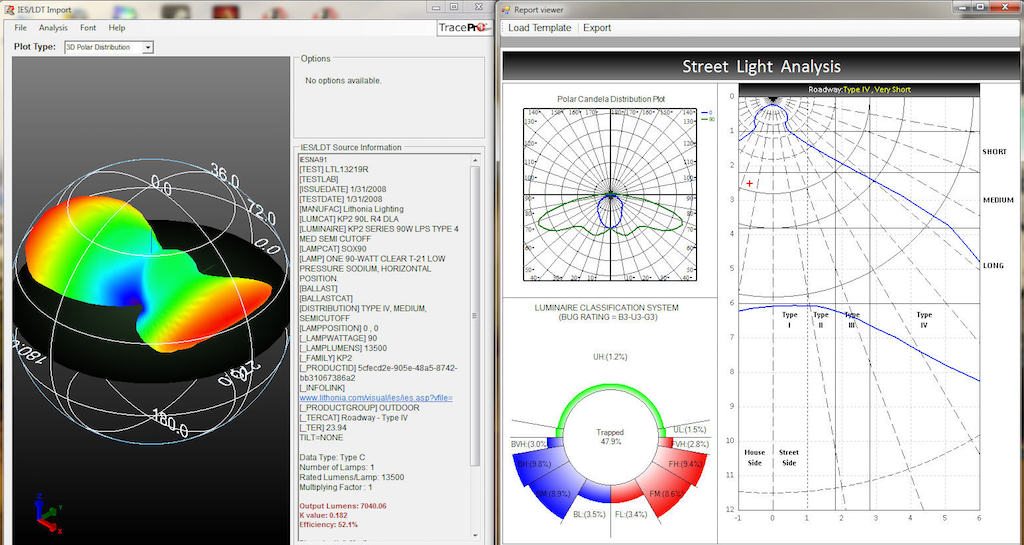
- Candela distributions
- Optical efficiency, luminance, and brightness
- Photorealistic rendering
- Fluorescence effects of phosphors
Lighting system designers can be confident that TracePro will accurately predict the performance and aesthetics of finished products with fewer costly prototypes. The software is used to design many types of products:
- LEDs
- Lighting
- Luminaires and blinds
- Transportation signs and emergency lighting

- Daylighting
- Architectural lighting design
- Display lighting
- Consumer products
- Automotive lighting
- Avionic lighting
- Medical lighting
- Entertainment lighting
TracePro and OSLO are robust tools for designing and analyzing optical systems for aerospace and defense applications.Both programs have been used to design and analyze many notable NASA optical systems, including:
- James Webb Space Telescope
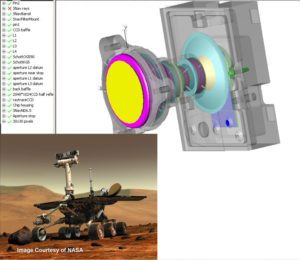
- Mars Rover Spirit and Opportunity cameras (re-used on Curiosity rover)
- Mars Climate Sounder
- Galaxy Explorer
- Moon Mineralogy Mapper
- Lunar Orbiter Laser Altimeter
Designers of military, aviation, and homeland defense systems rely on TracePro for an accurate, state-of-the-art, comprehensive design environment. The challenging nature of these applications requires the versatility to simulate optical systems operating in the extreme ultraviolet, through the visible and infrared, and extending to far infrared and millimeter wavelengths.
When designers must analyze baffles for the suppression of stray light due to scattering, diffraction, ghost images, and self-emission, TracePro is an invaluable tool.
TracePro can simulate many aspects of optical system performance, including:
- Stray light analysis and telescope baffle design
- PST, PSNIT, and OAR
- Ghost image analysis
- Simulation of spectrometers and other multi-spectral systems
- Polarization effects, including birefringence
- Thermal loading
- Narcissus effects
- Diffracted stray light
Los LEDs se han utilizado durante mucho tiempo para la iluminación ambiental del automóvil. También iluminan el tablero de instrumentos y los grupos de medidores usando lightpipes y guías de luz, que emplean curvas suaves para dirigir la luz por la Reflexión Interna Total (TIR). Esto se combina con esquinas biseladas que actúan como espejos, lo que permite a los diseñadores utilizar menos LEDs.
Designers of Head-Up Displays (HUDs), windshield systems, collision detection systems, rearview cameras, and backup illumination systems use TracePro to analyze their designs.
TracePro is a comprehensive, versatile software tool for modeling the propagation of light in automotive interiors and LED headlamp clusters. Designers can analyze:
- Illuminance from any interior or display lighting
- Luminance maps, photorealistic renderings, and “lit appearance” of instrument panels and interior and exterior lighting
- 3D illuminance on any optical or illumination geometry
- Candela plots on any surface
TracePro helps automotive designers visualize the effect of their LED layout, design, and placement through the use of photorealistic rendering of interior and exterior uses, including the illumination of:

- Instrument panels, consoles, and other controls
- Door handles and window openers
- Footwells and storage areas
- Trunks/boots and truck beds
- Headlamps and tail lights
- Warning Lamps
- HUD and windshield design
- Navigation, stereo and informational displays
TracePro is used by the world’s top display manufacturers for display design. Modern display backlights must meet specifications for spatial and angular uniformity, brightness, and spectral characteristics. Quickly achieving these criteria with a manufacturable, cost-effective design requires powerful, easy-to-use, accurate software.
- Flux report for surfaces and bulk media

- Polarization effects
- Fluorescence effects of phosphors
- Birefringence effects
- CIE plots
- Candela plots
- Lit appearance
- Luminance maps
- Irradiance/illuminance maps
Display designers can be confident that TracePro will accurately predict the performance and aesthetics of finished products with fewer costly prototypes. The software is used to design many types of products:
- Projection and flat panel displays
- Edge-Lit and Direct-Lit televisions
- Liquid Crystal Displays (LCDs)
- Plasma Displays
- Field Emission Displays (FEDs)

- Organic LED Displays (OLEDs)
- Electroluminescent Displays
- 3D displays
- Head-Up Displays (HUD)
- Digital signage
- Consumer electronics
- Avionics
- Medical imaging
- Brightness Enhancing Films
- Dichroic and Hot Mirror Filters
TracePro is a powerful software tool for modeling imaging and non-imaging optical devices. Models are created by importing from a CAD program or directly creating the solid geometry. Source rays propagate through the model with portions of the flux of each ray allocated for absorption, specular reflection and transmission, fluorescence, and scattering.
- Model real scattering effects using full anisotropic properties and asymmetric BSDF
- Analyze multiple paths using non-sequential ray tracing algorithms
- List absorbed and incident flux on every surface and object using
flux reports - Display flux by volume in laser cavities
- Export 3D flux data to third-party laser cavity design and analysis programs
- Watch energy propagate through the laser cavity along any axis using
the volume flux viewer - Analyze flux for absorbed, incident, originated, or exiting radiation
- Analyze any material or bulk scatter sources for incident, originating, absorbed, and lost energy
- Define multiple sources using asymmetric surface emission, including
user-defined properties - Analyze birefringence in crystals, including splitting of rays into ordinary
and extraordinary components - Track full polarization effects using Stokes vectors and Mueller matrices
TracePro offers equipment and industrial designers the confidence that the simulation will accurately predict performance without costly prototype iterations for a wide variety of technologies, such as:
- Illumination for machine vision
- Laser cavities
- Consumer electronic devices
- Laboratory instruments and measuring devices
TracePro offers life sciences and medical device designers a powerful, complete simulation tool ideally suited to their needs. TracePro facilitates the design and development process by communicating across disciplines including optics, mechanics, materials, chemistry, and biology. This is extremely important for medical instrumentation and device designers who must communicate system level specifications and design elements to both scientists and engineers.
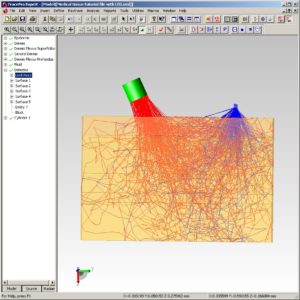
Medical system designers use TracePro to minimize the cost and time of iterative hardware prototyping and laboratory and clinical testing. Create models by directly creating the solid geometry in TracePro or by importing from a lens design program or a CAD program. Source rays propagate through the model with portions of the flux of each ray allocated for absorption, specular reflection and transmission, fluorescence, and scattering.
- Light distributions in illumination and imaging systems
- Stray light, scattered light, and aperture diffraction
- Throughput, loss, or system transmittance
- Flux or power absorbed by surfaces and bulk media
- Light scattering in biological tissue
- Polarization effects
- Fluorescence effects
- Birefringence effects
- TracePro offers medical systems designers the confidence that the simulated design will the performance and accuracy of finished devices, such as:For more information on Medical Device Design Using TracePro, view the Biomedical Brochure.predict
- Fluorescence spectroscopy
- UV, VIS, NIR, IR spectroscopy
- Flow cytometry
- Micro arrays and plate readers
- Nucleic acid amplification
- Assay, cell, and tissue-based imaging
- Confocal laser scanning and fluorescence microscopy
- Medical imaging and endoscopy
- In-Vitro/in-vivo diagnostics
- Biosensors
- Molecular detection: quantum dots, nanocrystals, luminescent reporters
- Laser and LED surgical devices
- Laser beam delivery systems for surgical instrumentation
- Laser Induced Fluorescence (LIF) Detection
- Fluorescence Resonance Energy Transfer (FRET)
TracePro is used extensively for stray light analysis and related applications, including:
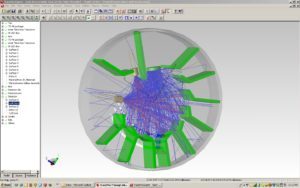
- Baffle design for stray light suppression
- Analysis of stray light due to scattering, aperture diffraction, and ghost images
- Self-emission of infrared and longer wavelength systems
- Simulation of polarization effects including birefringence
- Simulation of spectrometers and other multi-spectral systems
- Thermal effects and loading
- Narcissus effects
- Diffraction gratings
Due to its generality, TracePro has been used to simulate optical systems operating at wavelengths ranging from the extreme ultraviolet, through the visible and infrared, to millimeter wavelengths. The intuitive user interface and accurate CAD file import reduce setup time needed for stray light analysis.
TracePro’s Solar Utility simulation and optimization capabilities have helped manufacturers achieve even greater absorption and collection rates by boosting efficiency using optimized collector optics, textured panels, new material layouts and pyramidal structures to drop the cost per watt of solar collection systems.
TracePro’s Solar Utility is the industry’s only tool for analyzing 3D designs and simulating performance-based, standardized definitions for geographical location (latitude, longitude, and elevation), period of sun travel with multi-axial tracking, and irradiance for both direct and indirect sun contribution. Analysis output includes irradiance, candela maps, turbidity calculations, total flux, and efficiency over time on the target.
TracePro’s Solar Utility and inherent design, analysis, and optimization capabilities have been proven to accurately predict total energy output when solar collector systems are in real-world conditions. Currently, there are more than 350 research papers written by TracePro users detailing TracePro’s capabilities on solar collection systems.
TracePro’s Solar Utility and optimization features ensure solar collectors perform at peak efficiency. 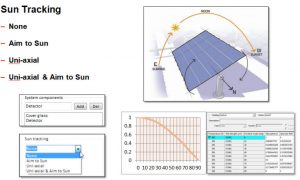
User-selectable wavelengths
Source modeling based on:
- Direct and indirect solar radiation, including atmospheric scattering
- Latitude, longitude, and elevation
- Date and time
User-defined parameters also include step intervals, wavelength, entrance pupil, solar irradiance, number of rays to be traced
Irradiance and candela mapping
Total collected energy reported in graphical and tabular formats over calculated period
Flux Report based upon sun position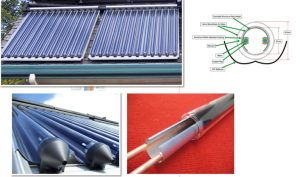
Sun Tracking
- Aim to Sun
- Uni-axial
- Uni-axial coupled with Aim to Sun
Global position
- Predefined city list
- Google Maps positioning
Turbidity
- Fully cloudy through sunny definitions specified per period